Lacrosse Workout Plan: A Comprehensive Guide
This guide details a comprehensive lacrosse training regimen, encompassing strength, speed, agility, and conditioning, drawing from programs designed for all levels – youth to collegiate.
It emphasizes maintaining off-season gains during competition, with post-game recovery and mid-week maintenance crucial for peak performance and injury prevention.
Lacrosse demands a unique blend of athleticism, requiring explosive power, exceptional agility, and sustained endurance. Unlike many sports, it necessitates both upper and lower body strength, alongside refined hand-eye coordination and stick skills. A generalized fitness plan simply won’t suffice; lacrosse-specific training is paramount.
This involves tailoring workouts to mimic the game’s dynamic movements – sprinting, cutting, checking, shooting, and ground ball retrieval. Programs should progressively build foundational strength before transitioning to power development and, ultimately, strength endurance. Maintaining conditioning levels throughout the season is equally vital, focusing on recovery and preventing performance decline. Effective training acknowledges lacrosse’s fast-paced nature and the need for athletes to perform repeatedly under fatigue.
The Importance of Off-Season Training
The off-season is where lacrosse players truly build their competitive edge. It’s the period dedicated to addressing weaknesses, developing foundational strength, and enhancing athletic capabilities without the pressures of in-season competition. Neglecting this time can lead to performance plateaus and increased injury risk.
A well-structured off-season program focuses on progressive overload, gradually increasing training intensity and volume. This allows for significant gains in strength, speed, and agility, which are then maintained during the season. Prioritizing foundational strength is crucial, establishing a base for more advanced power and conditioning work. Investing in off-season training is an investment in long-term athletic success.

Strength Training for Lacrosse Players
Strength training is vital for lacrosse, boosting performance, preventing injuries, and building a powerful physique through a phased, 12-week program.
Phase 1: Foundational Strength (Weeks 1-4)
This initial phase focuses on establishing a solid strength base, crucial for handling more intense training later. Prioritize proper form over lifting heavy weights during these first four weeks.
Exercises should include: squats, deadlifts (with lighter weight), bench press, overhead press, and rows. Implement 3 sets of 8-12 repetitions for each exercise. Core work is also essential; incorporate planks, Russian twists, and medicine ball slams.
The goal isn’t maximal strength, but building muscular endurance and reinforcing correct movement patterns. This foundational period prepares the body for the demands of lacrosse-specific power development and reduces injury risk.
Focus: Building a Base
The primary aim of this initial stage is to construct a robust physical foundation. This involves strengthening key muscle groups used in lacrosse – legs, core, back, and upper body – without overexertion.
Emphasis is placed on mastering fundamental movement patterns like squatting, hinging, pushing, and pulling. This ensures efficient and safe execution of more complex exercises later in the program.
Think of it as laying the groundwork for future gains in power, speed, and agility. Consistent effort with moderate weight and high repetition will build muscular endurance and prepare your body for the rigors of lacrosse training and competition.
Phase 2: Power Development (Weeks 5-8)
This phase transitions from foundational strength to explosive power, crucial for quick bursts of speed, powerful shots, and aggressive checks. We’ll incorporate exercises designed to enhance rate of force development.
Focus shifts to movements performed with maximal velocity, utilizing lighter weights and emphasizing proper technique. Plyometrics, such as box jumps and depth jumps, become integral to improve reactive strength.
Olympic lifts, or variations thereof, are introduced to develop full-body power. This stage builds upon the strength gained in Phase 1, transforming it into functional athleticism directly applicable to the demands of lacrosse.
Exercises for Explosive Power
Key exercises include power cleans, snatch pulls, and medicine ball throws, targeting the entire kinetic chain for maximum force output. Lower body power is developed through jump squats, box jumps, and lunges with explosive intent.
Upper body power is enhanced with plyometric push-ups, bench press throws with light weight, and rotational medicine ball throws. These movements mimic the rapid actions required during shooting and checking.
Focus on maintaining proper form throughout each exercise, prioritizing speed and explosiveness over sheer weight. Incorporate short rest periods to challenge the neuromuscular system and improve power endurance.
Phase 3: Strength Endurance (Weeks 9-12)
This phase focuses on maintaining strength gains while building muscular endurance, crucial for performing consistently throughout a full lacrosse season. Reduce the weight lifted from Phase 2, but increase the repetitions and sets.
Circuit training becomes a primary component, combining strength exercises with minimal rest. Exercises include bodyweight squats, push-ups, lunges, and core work performed in rapid succession.
The goal is to resist fatigue and maintain technique under challenging conditions. This phase prepares athletes for the demands of game play, ensuring they can sustain high-intensity efforts.
Maintaining Strength Through the Season
In-season strength maintenance prioritizes preventing detraining without compromising energy levels for games and practices. Training volume significantly decreases compared to the off-season phases.
Focus shifts to 1-2 brief, high-intensity sessions per week, emphasizing compound movements with lighter weights and higher repetitions. Prioritize exercises that directly translate to lacrosse-specific actions.
Post-game workouts are vital for recovery, incorporating light cardio, dynamic stretching, and foam rolling. Mid-week sessions should focus on core stability and injury prevention.

Speed and Agility Training
Developing explosive speed and quick changes of direction is paramount, utilizing sprint mechanics, agility ladders, and cone drills tailored to lacrosse movements.
Sprint Mechanics and Drills
Focusing on proper sprint mechanics is foundational for maximizing speed on the lacrosse field. Drills should emphasize a powerful arm drive, high knee lift, and full extension of the stride. Begin with acceleration drills, such as short sprints (10-20 yards) focusing on explosive first steps. Progress to flying 30s, where athletes reach top speed before entering a timed zone.
Incorporate resisted sprinting with sleds or bands to build strength and power. Also, practice deceleration drills, crucial for quick stops and changes of direction. Shuttle sprints, incorporating lacrosse-specific cuts and pivots, are highly beneficial. Regularly assess sprint times to track progress and identify areas for improvement. Prioritize technique over sheer speed initially, building a solid foundation for long-term gains.
Agility Ladder Drills
Agility ladder drills are essential for developing foot speed, coordination, and quickness – vital for lacrosse players. Start with basic drills like in-and-outs, lateral shuffles, and Icky Shuffles, focusing on rapid footwork and maintaining a low center of gravity. Progress to more complex patterns, incorporating crossovers and hopscotch variations.
Introduce drills that mimic lacrosse movements, such as cutting and changing direction quickly. Emphasize maintaining proper form and a quick tempo throughout each drill. Combine ladder work with a ball, having players dribble or pass while navigating the ladder. Regularly vary the drills to challenge athletes and prevent plateaus. Focus on reaction time and agility, not just speed.
Cone Drills for Lacrosse
Cone drills are invaluable for replicating game-like movements and enhancing agility specific to lacrosse. Set up cones in various patterns – straight lines, zigzags, and L-shapes – to simulate dodging, cutting, and changing direction with the ball. Incorporate drills that require players to sprint, shuffle, and backpedal around the cones while maintaining possession.
Focus on quick footwork, low center of gravity, and protecting the ball. Add passing or shooting elements to increase the drill’s complexity and game relevance. Vary cone spacing to challenge different aspects of agility. Drills should emphasize explosive first steps and rapid changes in direction, mirroring the demands of a fast-paced lacrosse game.

Conditioning for Lacrosse
Lacrosse demands high endurance; conditioning focuses on interval training, shuttle runs, and base building through long-distance running to sustain performance throughout games.
Interval Training Workouts
Interval training is paramount for replicating the stop-and-start nature of lacrosse. A foundational workout involves sprints of 400 meters, followed by equal rest periods – repeat this 6-8 times. Progress to shorter, more intense intervals like 100-meter sprints with minimal recovery (30-60 seconds), completing 10-12 repetitions.
Suicide drills are also highly effective, progressively increasing distances. Another variation includes shuttle sprints with a lacrosse ball, demanding both speed and stick skills. Focus on maintaining high intensity during work periods and active recovery during rest; Adjust intervals based on fitness level, gradually increasing intensity and reducing rest to continually challenge the cardiovascular system.
Shuttle Runs for Endurance
Shuttle runs are crucial for building the endurance needed for lacrosse’s dynamic gameplay. Begin with a standard 5-10-5 shuttle – sprinting 5 yards, touching a line, sprinting 10 yards to the opposite line, then back 5 yards. Repeat this 6-10 times, focusing on quick changes of direction.
Introduce lacrosse-specific variations by incorporating a stick and ball during the shuttle. Players can cradle the ball while sprinting, or perform a quick pass at each line. Increase the distance to challenge athletes further. Prioritize proper form and explosive movements. Monitor fatigue levels and adjust repetitions accordingly, ensuring adequate recovery between sets.
Long-Distance Running (Base Building)
Establishing a solid aerobic base is fundamental for lacrosse endurance. Begin with 2-3 runs per week, starting at 2-3 miles at a conversational pace. Gradually increase distance by no more than 10% each week, aiming for 4-6 miles during the off-season.
Incorporate varied terrain – hills and trails – to challenge different muscle groups. Focus on maintaining consistent pacing and proper running form. Long runs improve cardiovascular health and recovery capacity. Combine with interval training for a well-rounded conditioning program. Listen to your body and prioritize rest to prevent overtraining and injuries.

In-Season Maintenance Workouts
Maintaining strength and conditioning is key during the season, prioritizing recovery after games and utilizing lighter, focused sessions to prevent decline.
Post-Game Recovery Workouts
Following a lacrosse game, the primary focus shifts to recovery and minimizing muscle soreness. The most intense workout should occur immediately after competition, aiding in flushing metabolic waste and reducing stiffness. This session isn’t about building strength, but rather promoting blood flow and restoring muscle function.
Low-intensity cardio, like jogging or cycling for 10-15 minutes, is beneficial. Static stretching, holding each stretch for 30 seconds, targets major muscle groups used during the game – legs, core, and shoulders. Foam rolling can further alleviate muscle tension and improve flexibility. Hydration and proper nutrition are also vital components of post-game recovery, replenishing glycogen stores and aiding muscle repair.
Mid-Week Maintenance Sessions
During the lacrosse season, mid-week workouts prioritize maintaining strength and conditioning levels achieved during the off-season. These sessions should be lower in volume than off-season training to prevent overtraining and allow for adequate recovery before the next game; The goal is to avoid detraining while minimizing fatigue.
Focus on lighter weightlifting with higher repetitions, emphasizing proper form over maximal load. Incorporate short, high-intensity interval training (HIIT) to maintain cardiovascular fitness. Light agility drills and stickwork can also be included, keeping skills sharp without causing significant muscle breakdown. Prioritize active recovery and listen to your body, adjusting the intensity as needed.

Lacrosse-Specific Drills
Refine skills with focused drills: wall ball for passing/catching, ground ball work for possession, and shooting drills to enhance accuracy and power.
Wall Ball Workouts
Wall ball is foundational for lacrosse players, dramatically improving stick skills, hand-eye coordination, and overall comfort with the ball. Begin with basic passing – both hands, alternating – focusing on quick releases and accurate targets. Progress to incorporating different shooting motions, fakes, and dodges while maintaining consistent repetitions.
Structured routines are key: try 5 minutes of right-handed passing, followed by 5 minutes of left-handed passing, then 10 minutes mixing both with varied targets. Add challenges like quick stick transfers, split dodges towards the wall, and incorporating a catch-and-shoot sequence. Increase duration and complexity weekly. Aim for at least 30-60 minutes of wall ball several times a week to see significant improvement.
Ground Ball Drills
Mastering ground balls is paramount in lacrosse; these drills focus on technique, speed, and tenacity. Start with stationary scoops, emphasizing a low center of gravity, proper stick angle, and quick hand speed. Progress to moving scoops, incorporating sprints and changes of direction. A key drill involves a coach scattering balls, forcing players to react quickly and secure possession.
Introduce competitive elements: ground ball races or drills where players must scoop and pass to a teammate under pressure. Focus on extending towards the ball, cradling securely upon pickup, and protecting the stick. Consistent practice – 15-30 minutes daily – builds muscle memory and improves reaction time, turning contested balls into scoring opportunities.
Shooting Drills
Effective shooting drills refine accuracy, power, and shot selection. Begin with stationary shooting, focusing on proper form: footwork, hand placement, and follow-through. Gradually increase distance and incorporate movement. A crucial drill involves shooting on the run, simulating game-like scenarios. Implement target practice, aiming for specific areas of the goal to improve precision.
Introduce variations: quick release shots, dodge-and-shoot, and shooting under pressure from a defender. Emphasize shooting with both hands to become a more versatile threat. Consistent repetition – 20-30 minutes daily – builds confidence and muscle memory, translating to more goals during games.

Injury Prevention for Lacrosse Players
Prioritize comprehensive warm-ups, dynamic stretching, and proper cool-downs to minimize risk. Address common lacrosse injuries – ACL tears, concussions, and shoulder strains – proactively.
Warm-up Routines
A dynamic warm-up is essential before any lacrosse activity, preparing muscles and joints for the demands of the sport. Begin with light cardio, like jogging or jumping jacks, for five to ten minutes to elevate heart rate and increase blood flow.
Follow this with dynamic stretches, focusing on movements that mimic lacrosse-specific actions. Include arm circles, leg swings, torso twists, and high knees. Incorporate agility drills, such as lateral shuffles and cariocas, to enhance coordination and responsiveness.
Specifically target shoulder mobility with exercises like band pull-aparts and arm rotations. Don’t forget core activation with planks and Russian twists. A thorough warm-up reduces injury risk and optimizes performance, ensuring players are fully prepared for training or competition.
Cool-down and Stretching
Following intense lacrosse training or games, a proper cool-down is vital for recovery and injury prevention. Begin with light cardio, such as a slow jog or walk, for five to ten minutes to gradually decrease heart rate and remove metabolic waste.
Transition into static stretching, holding each stretch for 20-30 seconds. Focus on major muscle groups used during lacrosse, including legs (hamstrings, quads, calves), hips, core, shoulders, and arms.
Prioritize stretches that address common lacrosse-related tightness. Foam rolling can also be incorporated to release muscle tension and improve flexibility. Consistent cool-down and stretching routines promote muscle recovery, reduce soreness, and enhance long-term athletic performance.
Common Lacrosse Injuries and Prevention
Lacrosse players are susceptible to various injuries, including ankle sprains, ACL tears, concussions, and muscle strains. Ankle sprains often occur due to quick changes in direction, while ACL injuries can result from pivoting or landing awkwardly.
Concussions are a serious concern, emphasizing the importance of proper technique and protective gear. Muscle strains commonly affect the hamstrings, groin, and shoulders.
Preventative measures include consistent warm-up and cool-down routines, strength and conditioning programs, and proper technique instruction. Utilizing appropriate protective equipment, like helmets and mouthguards, is crucial. Prioritizing injury prevention minimizes downtime and maximizes athletic potential.

Sample Weekly Training Schedule
A balanced schedule integrates strength, speed, lacrosse skills, and recovery. Prioritize upper/lower body strength days, agility work, and skill-specific conditioning for optimal results.
Monday: Strength Training (Upper Body)
Focus on building upper body strength crucial for shooting, checking, and overall lacrosse performance. Begin with a dynamic warm-up, including arm circles and shoulder rotations. Core exercises like planks and Russian twists are essential for stability.
Key exercises include bench press (3 sets of 8-12 reps), pull-ups (3 sets to failure), and overhead press (3 sets of 8-12 reps). Incorporate dumbbell rows (3 sets of 10-15 reps per side) and bicep curls (3 sets of 12-15 reps) to target various muscle groups.
Finish with triceps extensions (3 sets of 12-15 reps) and rotator cuff exercises to prevent injuries. Cool down with static stretching, holding each stretch for 30 seconds. Remember proper form is paramount to avoid injury and maximize gains.
Tuesday: Speed and Agility
This session concentrates on enhancing quickness, acceleration, and change-of-direction skills vital for lacrosse. Start with a thorough dynamic warm-up, including high knees, butt kicks, and lateral shuffles. Focus on proper running mechanics – maintaining a low center of gravity and powerful arm drive.
Implement sprint drills like 20-yard dashes (6-8 reps) and 40-yard sprints (4-6 reps) with full recovery. Utilize agility ladder drills to improve footwork and coordination. Cone drills, simulating game-like movements, are also beneficial.
Include shuttle runs (5-10-5 drill) to build endurance and agility. Finish with a cool-down and static stretching, targeting hamstrings, quads, and hip flexors. Prioritize explosive movements and controlled changes in direction.
Wednesday: Lacrosse Skills & Conditioning
This day blends lacrosse-specific skill work with demanding conditioning to build game endurance. Begin with wall ball drills (15-20 minutes) focusing on passing and catching accuracy, followed by ground ball drills to improve reaction time and technique.
Incorporate shooting drills, emphasizing both power and precision. Integrate these skills into conditioning circuits – for example, sprint to a spot, perform ground balls, then take a shot on goal.
Interval training is key: alternate between high-intensity lacrosse drills and short recovery periods. Conclude with light jogging and static stretching, focusing on muscles used during lacrosse activities. This session mimics the demands of a game.
Thursday: Strength Training (Lower Body)
Focus on building lower body strength and power, crucial for explosive movements in lacrosse. Begin with a dynamic warm-up, including leg swings and hip circles. Core exercises like planks and Russian twists are essential for stability.
Key exercises include squats (3 sets of 8-12 reps), deadlifts (3 sets of 5-8 reps), and lunges (3 sets of 10-12 reps per leg). Incorporate plyometrics like box jumps (3 sets of 5-8 reps) to enhance explosive power.
Finish with hamstring curls and calf raises (3 sets of 12-15 reps). Cool down with static stretching, holding each stretch for 30 seconds. Prioritize proper form to prevent injuries.
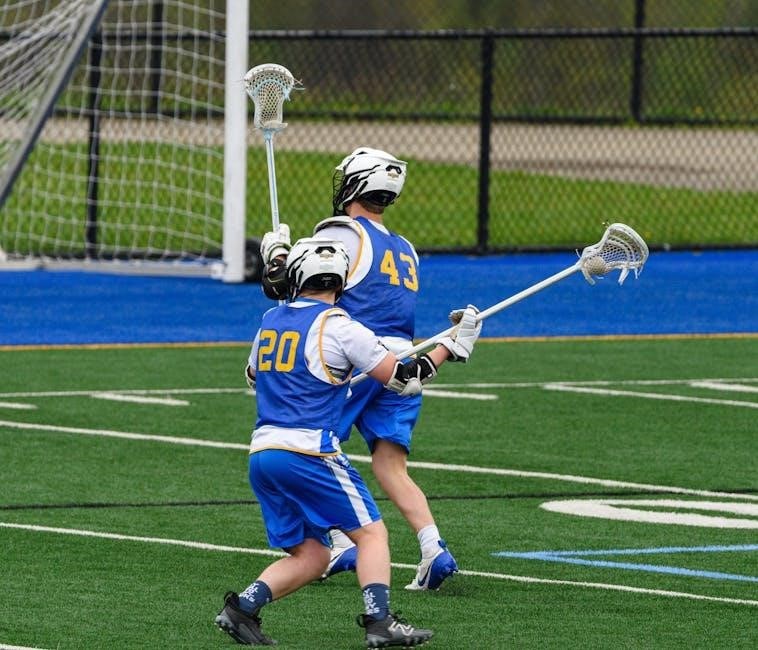
Friday: Active Recovery/Light Conditioning
Friday’s session prioritizes recovery and prepares the body for the weekend. Focus on low-intensity activities that promote blood flow and reduce muscle soreness. Begin with 20-30 minutes of light cardio, such as jogging or cycling, at a conversational pace.
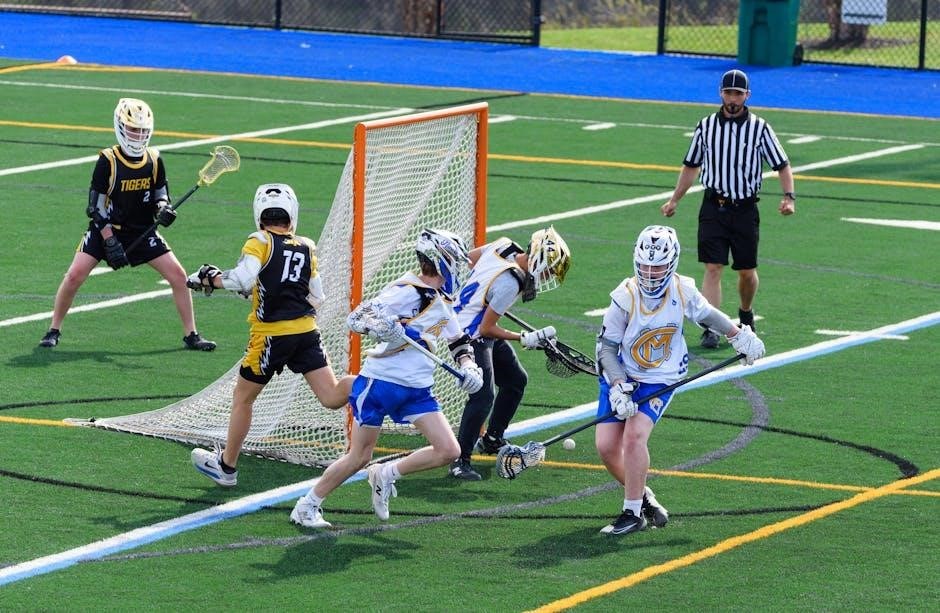
Incorporate dynamic stretching and foam rolling, targeting major muscle groups. Include core work, like bird-dogs and side planks, to maintain stability without overexertion.
Consider a short, light lacrosse-specific drill, like wall ball, for 15-20 minutes. This maintains skill without adding significant fatigue. Hydration and proper nutrition are vital for optimal recovery.
Related Posts

functions pdf worksheet
Function PDF worksheets are vital tools for mastering algebraic concepts!…

hotel trades council industry wide agreement pdf
The Hotel Trades Council (HTC) Industry-Wide Agreement (IWA) is a…

pain nursing care plan examples pdf
Pain nursing care plans are essential for managing acute and…